Paragraph IV Certifications: How Generic Drug Companies Challenge Patents Before Market Entry
Nov 20 2025

When we talk about frailty, a clinical state of increased vulnerability to stressors due to reduced physiological reserve across multiple systems. Also known as geriatric frailty, it’s not just getting older—it’s losing the body’s ability to bounce back from even small challenges like a cold, a fall, or a new pill. Frailty shows up as unexplained weight loss, constant tiredness, slow walking speed, weak grip, and low physical activity. It’s common in people over 70, but it’s not inevitable. Many older adults stay strong well into their 80s and beyond. The difference? Often, it’s how their medications are managed.
Drug interactions, when two or more medications clash in the body and cause unexpected side effects. Also known as polypharmacy risks, it’s one of the biggest drivers of frailty in older adults. Think about someone taking five or six prescriptions: a blood pressure pill, a statin, a painkiller, a sleep aid, and a diuretic. Each one might be fine alone. Together? They can drain energy, mess with balance, hurt kidneys, or cause confusion. That’s not aging—it’s a medication problem. Studies show that nearly 40% of frail older adults are on at least five drugs, and many of those aren’t even needed anymore. The same goes for medication side effects, unintended physical reactions to drugs that aren’t allergic but still harm function. Dizziness from a beta-blocker? Constipation from an opioid? That’s not normal—it’s a red flag.
Frailty doesn’t happen in a vacuum. It’s tied to chronic conditions like diabetes, heart failure, and kidney disease—all of which require long-term meds. But those same meds can make frailty worse. For example, a person with geriatric medicine, the specialized branch of healthcare focused on treating older adults with complex health needs. might be on a diuretic for heart issues, but that same drug can cause dehydration and low sodium, leading to falls. Or someone on long-term steroids for arthritis might develop muscle loss and moon face, pushing them closer to frailty. The key isn’t stopping meds—it’s asking: Is this still helping? Is the risk worth it? And is there a safer alternative?
What you’ll find in the posts below isn’t just theory. It’s real-world advice from people who’ve been there: how to spot when a drug is making you weaker, how to talk to your doctor about cutting back, what supplements might help or hurt, and how to avoid the trap of taking too many pills just because they were prescribed years ago. You’ll see how things like NSAIDs, bisphosphonates, and even creatine can quietly chip away at strength. This isn’t about fear—it’s about control. If you or someone you care about is feeling weaker, slower, or more tired than before, it’s not just age. It might be your meds. And you can do something about it.
Nov
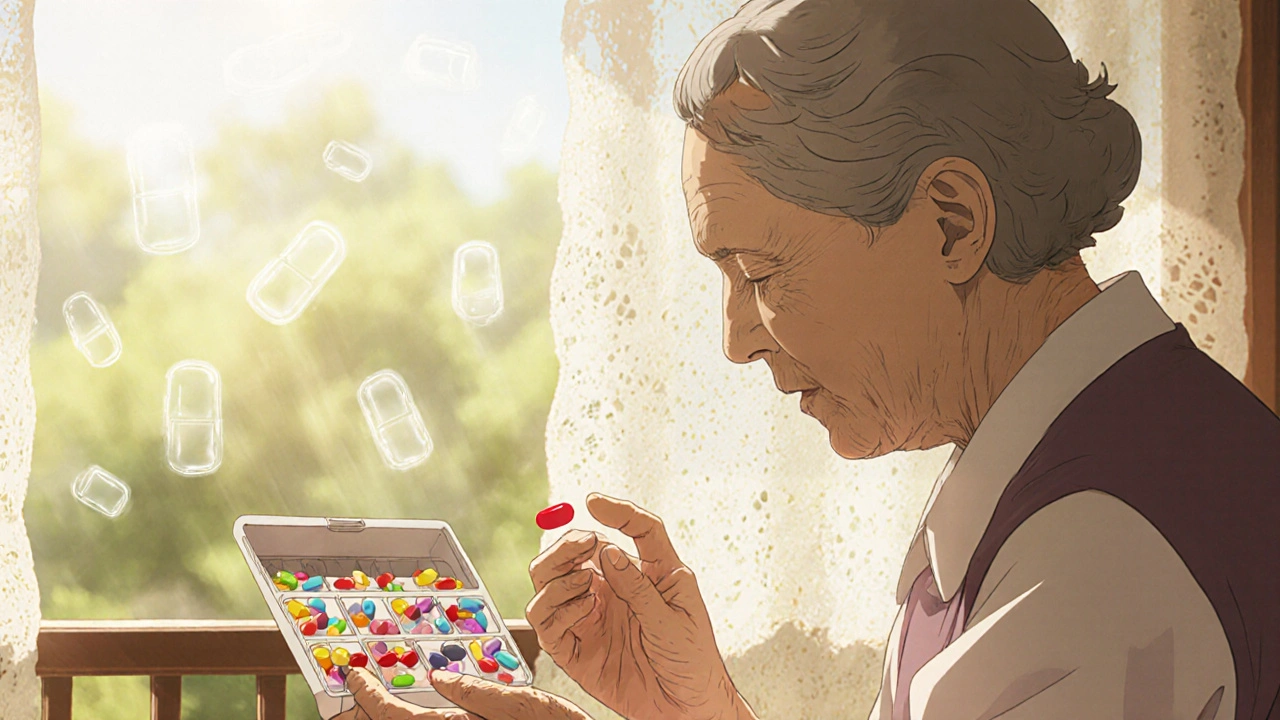
Frailty and polypharmacy in older adults create a dangerous cycle of side effects and decline. Learn how to reduce medication burden safely and improve quality of life through deprescribing and targeted care.
Nov 20 2025

Dec 22 2025
Jan 26 2026

Apr 26 2025

Jan 31 2026