How Animal-Assisted Therapy Helps Parkinson’s Patients
Oct 13 2025

When you hear creatine, a naturally occurring compound found in muscle cells that helps produce energy during heavy lifting or high-intensity exercise. Also known as creatine monohydrate, it's one of the most studied supplements in sports nutrition. Most people take it to build muscle, boost strength, or recover faster—but safety questions keep coming up. Is it hard on your kidneys? Does it cause cramps or weight gain? Is it safe long-term? The answers aren’t as scary as the rumors suggest.
Creatine side effects, typically mild and rare when taken at recommended doses, include bloating, stomach upset, or water retention. These aren’t signs of damage—they’re normal physiological responses. Studies tracking athletes for up to five years show no increase in kidney or liver problems in healthy people. The idea that creatine harms kidneys comes from old, flawed studies that didn’t control for other factors like dehydration or pre-existing conditions. If you’re healthy, your kidneys handle creatine just fine. But if you have kidney disease, talk to your doctor before starting.
Creatine dosage, the amount you take and how you take it matters more than most people think. A standard dose is 3–5 grams per day. No loading phase needed. No cycling required. You don’t need to take it with sugar or carbs to make it work—just take it consistently. For athletes, it’s proven to improve sprint speed, power output, and muscle mass. For older adults, it helps fight muscle loss. For brain health, early research shows possible benefits for memory and focus under stress.
Some people avoid creatine because they think it’s "artificial" or "steroid-like." It’s not. It’s made from three amino acids your body already uses. You get it naturally from red meat and fish. A pound of beef gives you about 2 grams. Most supplement users just top up what their diet doesn’t provide. It’s not a magic pill, but it’s one of the few supplements with solid, repeatable science behind it.
Who shouldn’t take it? Teens under 18 should wait unless supervised by a doctor. People with severe kidney disease, those on nephrotoxic drugs, or anyone with uncontrolled diabetes should check in first. Pregnant or breastfeeding women? Not enough data—better to skip unless advised. And if you’re taking diuretics or NSAIDs like ibuprofen, talk to your pharmacist. These aren’t hard rules—they’re smart precautions.
What you’ll find in the articles below isn’t marketing fluff or generic advice. It’s real talk from people who’ve used creatine, doctors who’ve studied it, and athletes who’ve tracked their results. You’ll see how it affects different bodies, what the long-term data says, and how to spot fake claims. No hype. No fearmongering. Just what works—and what doesn’t.
Nov
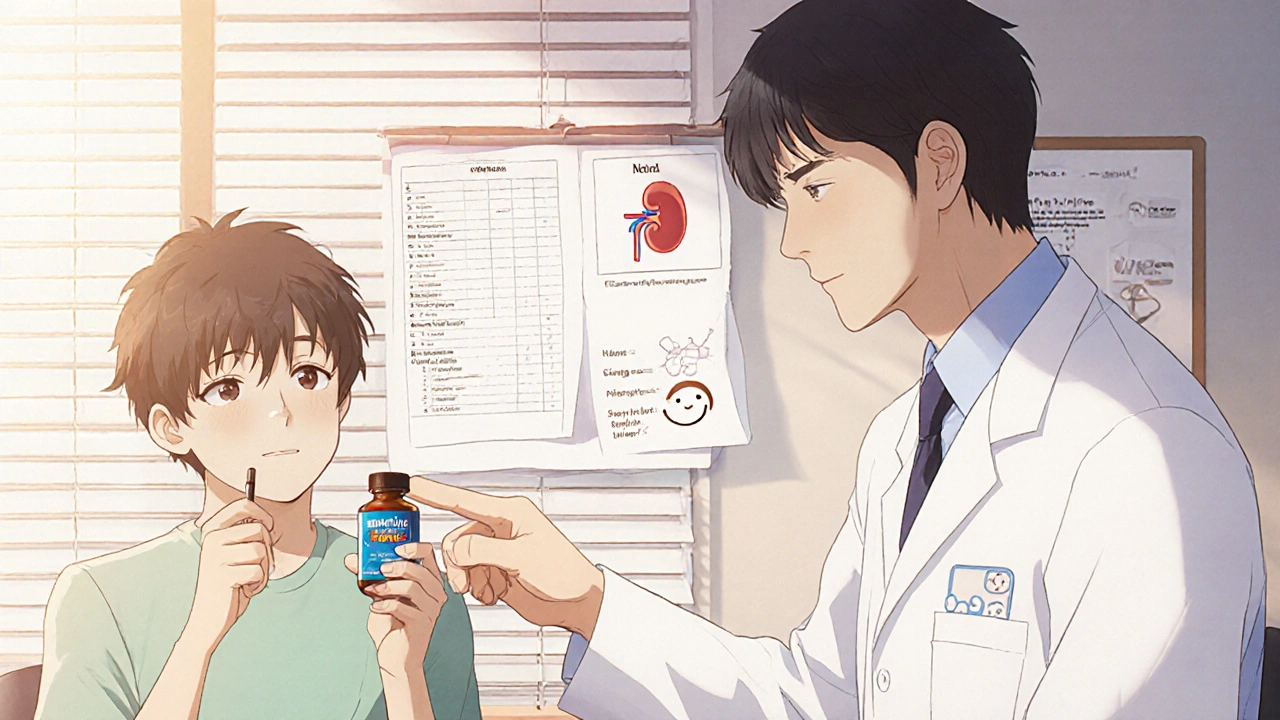
Creatine raises creatinine levels, which can falsely suggest kidney damage. Learn how to monitor renal function accurately if you're taking creatine or on kidney medications - without unnecessary tests or misdiagnosis.

Oct 13 2025

May 22 2025

Sep 28 2025

Sep 3 2025

Jul 15 2025