Placebo Effect with Generics: Why Perception Shapes Medication Outcomes
Jan 4 2026

When we talk about community health, the collective well-being of people in a neighborhood, town, or region, shaped by access to care, education, and social support. Also known as public health, it’s not just about hospitals—it’s about whether someone can afford their blood pressure pill, understand their doctor’s instructions, or know when a side effect is dangerous. This is where real life meets medicine. A person in a rural town might skip their diabetes meds because the pharmacy is 40 miles away. A senior on fixed income might cut pills in half to stretch their supply. A parent might not tell their doctor about a rash from a new drug because they’re afraid of being told to stop treatment. These aren’t edge cases—they’re everyday realities that shape health outcomes across the country.
Medication access, the ability to obtain prescribed drugs without financial, geographic, or systemic barriers is a core pillar of community health. In 2025, over 15 million Americans rely on state and federal programs just to fill their prescriptions. Programs like Medicare Extra Help and state pharmaceutical assistance plans (SPAPs) aren’t luxury perks—they’re lifelines. But knowing they exist is half the battle. The other half is understanding how to apply, what they cover, and how to spot authorized generics that work just like brand-name drugs but cost less. Then there’s drug safety, the practice of using medications correctly to avoid harm from interactions, misdiagnosed reactions, or improper dosing. Many people think they’re allergic to penicillin when they just had a side effect. Others mix OTC painkillers without realizing they’re doubling up on acetaminophen. And for older adults on five or more drugs, the risk of dangerous interactions spikes fast. That’s why deprescribing—safely cutting back on unnecessary meds—is becoming a key tool in managing frailty and improving quality of life.
Community health doesn’t happen in a vacuum. It’s shaped by how well people can talk to their care teams, whether they know how to read a pill bottle, and if they’re aware of FDA alerts that could save their life. That’s why the posts here cover everything from how to create a Medication Action Plan with your doctor, to identifying real generics by NDC codes, to subscribing to FDA safety notifications before your next refill. You’ll find clear advice on managing side effects, understanding allergic reactions vs. intolerance, and cutting through the noise around new drugs like GLP-1 agents or next-gen antibiotics. No fluff. No marketing. Just what you need to stay safe, save money, and speak up when something doesn’t feel right. Whether you’re managing a chronic condition, caring for an aging parent, or just trying to make sense of your own prescriptions, this collection gives you the tools to take real control—because your health shouldn’t depend on luck or how much you can afford to pay.
Nov
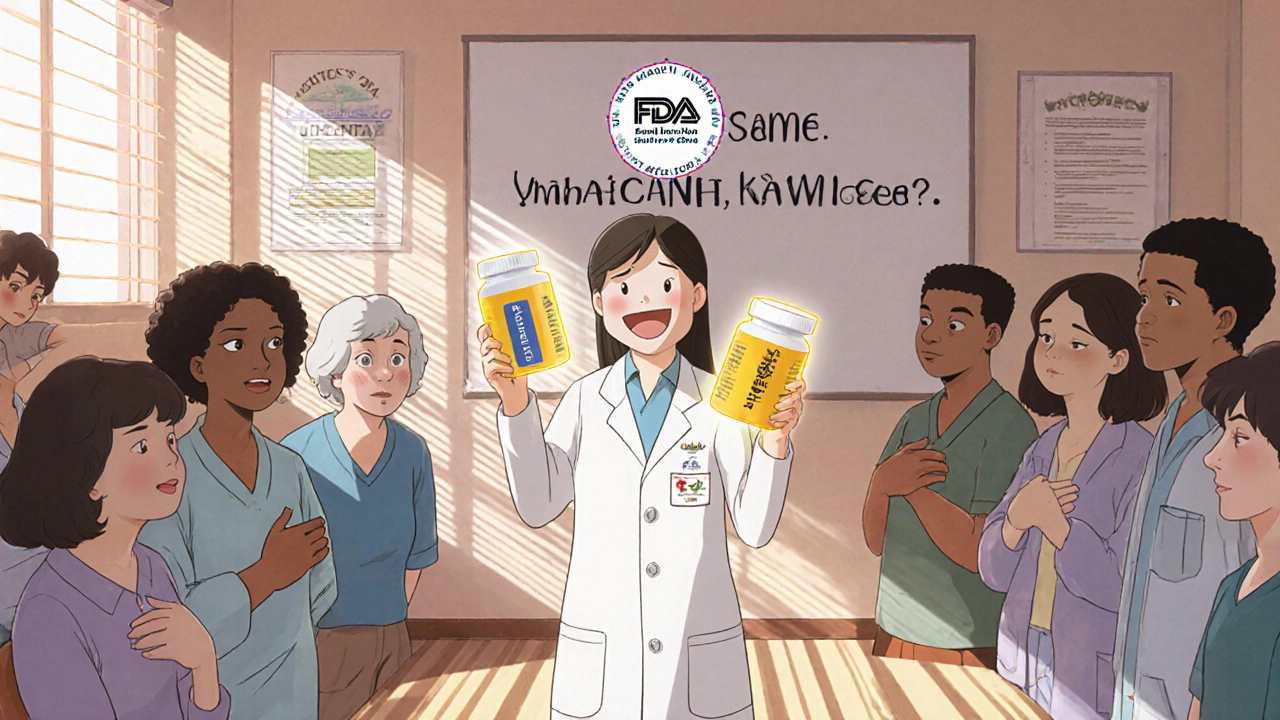
Learn how public education on generic drugs is helping patients save money without sacrificing safety. Discover the facts behind generic medication equivalence and how community health programs are closing the knowledge gap.
Jan 4 2026
Sep 25 2025
Feb 22 2026

Jul 4 2025
Dec 2 2025