
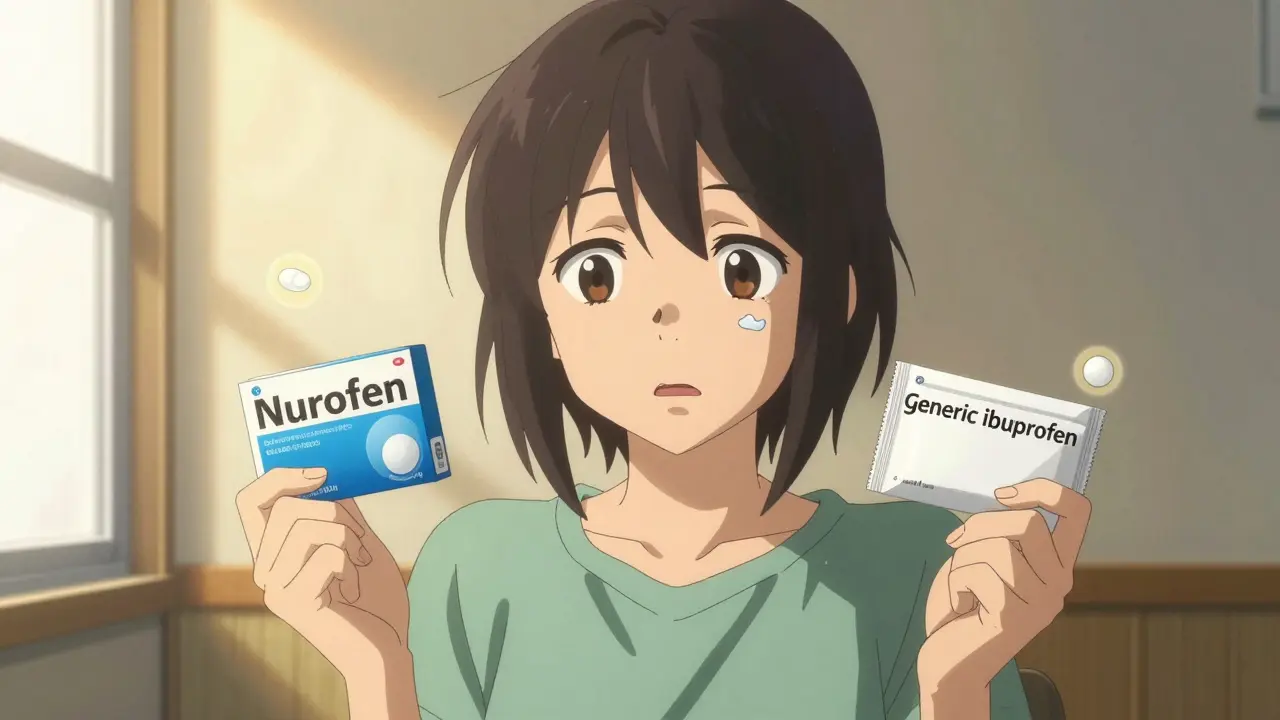
When you pick up a prescription, do you ever wonder if the pill in your hand works differently because of what it looks like? Not because of its chemistry, but because of the brand name on the bottle? It sounds strange - but science says it’s true. A sugar pill labeled as a well-known brand can work just as well as the real thing. The same pill, labeled "generic," often doesn’t. This isn’t magic. It’s the placebo effect - and it’s happening every day with generic drugs.
What Happens When You Think a Generic Won’t Work
Imagine you’ve been taking a brand-name painkiller for years. Your doctor switches you to a cheaper generic version. You take it. But instead of relief, you feel nothing. Or worse - you start getting headaches, nausea, even muscle pain. The problem? The generic has the exact same active ingredient. Same dose. Same manufacturer, sometimes. But your brain doesn’t know that. It sees a different color, a plain label, a lower price - and it assumes it’s less effective. A 2016 study at the University of Reading tested this with 87 students who suffered from frequent headaches. They were given identical placebo tablets - no medicine at all. Half were told they were taking "Nurofen," a trusted brand. The other half were told they were taking "generic ibuprofen." The Nurofen group reported pain relief just as strong as if they’d taken real ibuprofen. The generic group? Their pain barely improved. The difference? Perception. The brain believed the brand would work - and it made it happen. This isn’t just about pain. It shows up in depression, anxiety, high blood pressure, even migraines. When patients believe a drug is weaker, their body responds as if it is. Neuroscientists have seen this on brain scans. When people think they’re taking a brand-name drug, areas linked to expectation - like the dorsomedial prefrontal cortex - light up more. That’s not just "in their head." That’s real biological change. Their nervous system is literally reacting differently.The Nocebo Effect: When Expectations Make You Sick
The flip side of the placebo effect is the nocebo effect - when negative expectations cause real symptoms. This is especially dangerous with generics. In one major study, patients were given fake statins - pills with no active ingredient. Yet 4% to 26% of them quit because they believed they were getting muscle pain, a known side effect of statins. They weren’t. But their brains, primed by warnings and stigma around generics, convinced them they were. One patient told researchers: "I knew statins cause muscle problems, so I paid attention to every twinge." That’s the nocebo effect in action. The brain starts scanning for symptoms. A normal ache becomes "muscle pain." A tired feeling becomes "fatigue." A stomach rumble becomes "nausea." And suddenly, you’re convinced the drug isn’t working - or worse, it’s harming you. Even price plays a role. In one experiment, people were given identical pain-relief creams. One group was told it cost $2.50. The other was told it cost $250. The expensive cream? It worked better. But here’s the twist - the people who thought they paid more also reported more side effects. Their brains expected more from the price - both good and bad. The same cream, same chemistry, different outcomes - all because of what they believed.Why Branding Matters More Than You Think
Branding isn’t just marketing. It’s a psychological signal. When you see "Advil," "Lipitor," or "Nurofen," your brain associates it with quality, reliability, and effectiveness. It’s built over years of advertising, doctor recommendations, and personal experience. Generic drugs don’t have that history. They’re often plain white pills with no logo. Even if they’re made in the same factory, they feel like second-rate alternatives. A 2021 analysis found that this perception gap reduces real-world effectiveness of generics by 8-12% in conditions like depression and chronic pain - conditions where placebo responses are strongest. That’s not a small number. It means thousands of people aren’t getting the full benefit of their medication - not because the drug fails, but because their mind doesn’t trust it. Some pharmaceutical companies are trying to fix this. Teva, one of the world’s largest generic makers, now sells "Advil Migraine" - a branded generic. Same active ingredient as regular ibuprofen. Same dose. Same packaging, just with a brand name. It’s not cheaper, but it sells better. Why? Because it feels like a real product. The brain trusts it.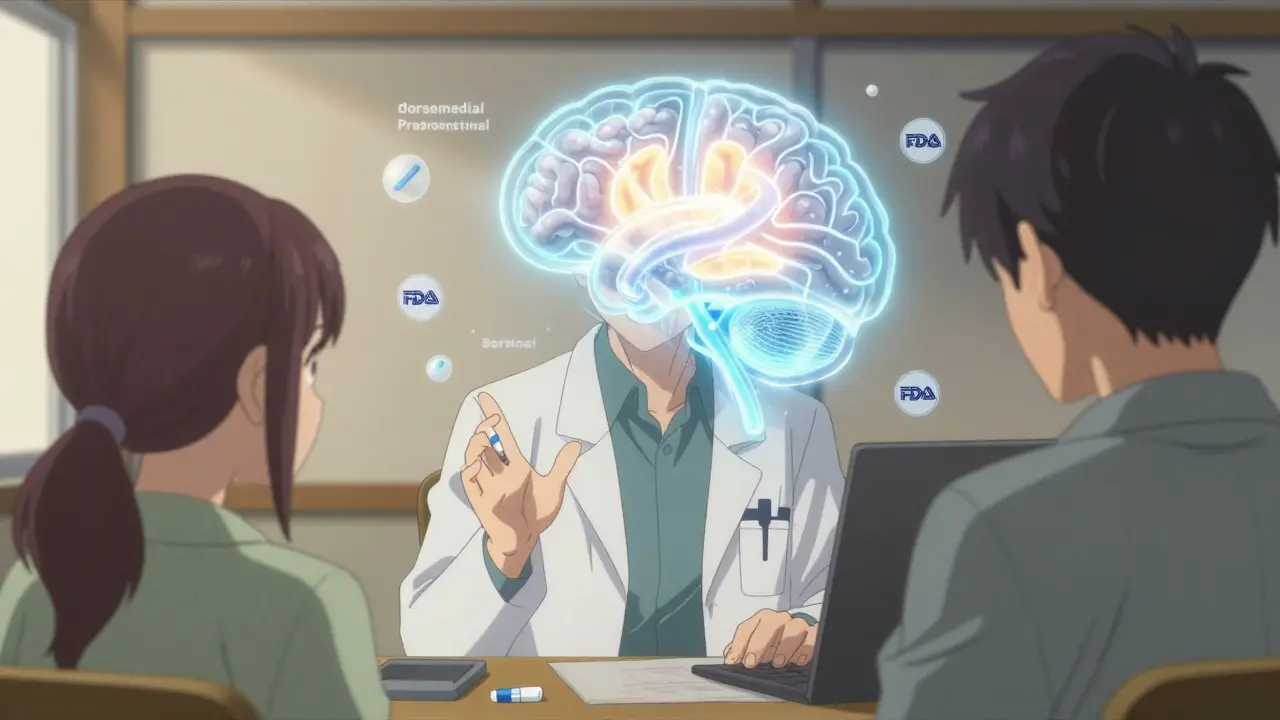
What Works: Fixing the Perception Problem
The good news? This isn’t hopeless. Perception can be changed - and it doesn’t take much. A 2020 study in JAMA Internal Medicine found that when doctors spent just two to three extra minutes explaining that generics are required by the FDA to be identical in active ingredient and absorption, patient adherence jumped by 18-22%. Simple. Direct. Honest. One doctor in Oregon told patients: "The FDA says generics must deliver the same amount of medicine within 8-13% of the brand. That’s tighter than the allowed variation between two batches of the brand-name drug. You’re getting the same treatment - just without the marketing cost." Another trick? Don’t say "just a generic." Never say "it’s cheaper, so it’s good enough." That’s a nocebo trigger. Instead, say: "This is an FDA-approved equivalent. It’s the same medicine, just priced differently." Even packaging helps - but not in the way you’d think. A 2021 study in the BMJ found that adding a simple line to generic packaging - "This medication is FDA-approved equivalent to [Brand Name]" - increased patient confidence by 34%. No fancy colors. No logos. Just a clear statement of equivalence.Why Some Generics Work Better Than Others
Not all generics are treated the same. The perception gap is biggest in mental health. In 2023, only 68% of patients were willing to accept generic antidepressants, even though they’re chemically identical. For blood pressure meds? 89% accept them. Why? Because depression feels personal. You’re already doubting yourself. Adding a pill that looks "cheap" makes it easy to blame the drug - not your illness. Cardiovascular drugs, on the other hand, are seen as "essential." People don’t question them. They take them like insulin. No stigma. No doubt. That’s why adherence to generic heart meds is so high. The lesson? Perception isn’t random. It’s shaped by culture, personal experience, and how the medical system talks about these drugs. If you treat generics like second-class medicine, patients will too.
What You Can Do
If you’re a patient: Don’t assume a generic won’t work. Ask your pharmacist or doctor: "Is this the same as the brand?" The answer is almost always yes. If you feel worse after switching, talk to your provider - but don’t jump to conclusions. It might be your expectations, not the medicine. If you’re a provider: Spend two minutes explaining equivalence. Avoid words like "cheap," "basic," or "just a generic." Use "FDA-approved equivalent." Share the science. Patients trust their doctors more than ads. Your words matter. If you’re a policymaker: Stop designing insurance plans that make generics feel like a compromise. Tiered formularies that label generics as "step two" reinforce the idea that they’re inferior. That’s not policy - that’s placebo sabotage.What’s Next
Researchers are now testing "expectation priming" - short videos shown to patients before they take generics. These explain how the placebo effect works, how the brain influences healing, and why trust matters. Early results? Treatment effectiveness jumps by 28%. That’s not a placebo. That’s science. Pharmaceutical companies are also designing "trust-based" packaging - blue and white colors, clean fonts, no medical jargon - based on cross-cultural studies showing what signals safety and reliability. It’s not deception. It’s clarity. The future of generics isn’t just about cost. It’s about trust. And trust isn’t built by lowering prices. It’s built by changing minds.Do generic drugs have the same active ingredients as brand-name drugs?
Yes. By law, the FDA requires generic drugs to contain the exact same active ingredient, in the same strength and dosage form, as the brand-name version. They must also be absorbed into the bloodstream at the same rate and extent - within 8-13% of the brand. This is called bioequivalence. The difference lies in inactive ingredients like fillers, dyes, or coatings - which don’t affect how the medicine works.
Can a placebo work as well as a real drug?
In some cases, yes - especially for conditions like pain, depression, and anxiety, where the brain plays a big role in how symptoms are felt. Studies have shown that placebo pills labeled as brand-name drugs can produce pain relief equal to real medication. This doesn’t mean the drug is unnecessary - it means your expectations amplify the effect. For serious conditions like infection or cancer, placebos don’t replace real treatment. But for subjective symptoms, perception can be powerful.
Why do some people feel worse on generics?
It’s often not the drug - it’s the belief. If you’ve been told generics are inferior, or if you’ve had a bad experience before, your brain may start noticing normal sensations as side effects. This is called the nocebo effect. You’re not imagining it - your body really does react. But the trigger isn’t chemistry. It’s expectation. Talking to your doctor about this can help reset your brain’s response.
Does the price of a medication affect how well it works?
Yes - even if the pills are identical. In experiments, people who believed they were using an expensive cream reported more pain relief - and also more side effects. The same was true for pills. Higher price = higher expectations. That can boost effectiveness, but it can also make side effects feel worse. That’s why doctors are advised not to mention cost when prescribing generics. It’s not about the price - it’s about trust.
Are generic drugs less safe than brand-name drugs?
No. Generic drugs must meet the same strict safety and manufacturing standards as brand-name drugs. The FDA inspects generic factories just as often as brand-name ones. In fact, many brand-name drugs are made in the same factories as generics - just under a different label. The only difference is cost and branding. Safety is identical.
Can education improve how well generics work?
Absolutely. Studies show that when patients understand that generics are equivalent, their outcomes improve. One study used a short video explaining how the placebo effect works - and it boosted the effectiveness of generic antidepressants by 28%. Knowledge reduces fear. And when fear drops, the body responds better to treatment.


Comments
Enrique González
Wow. I never thought about how much my brain was influencing whether a pill worked or not. This makes so much sense now - I switched to generics for my anxiety meds and felt worse for weeks. Turns out I was convinced they were garbage. My doctor never explained the equivalence. My bad, not the medicine.
John Wilmerding
From a clinical pharmacology standpoint, this phenomenon is well-documented in the literature on conditioned placebo responses and expectancy theory. The dorsomedial prefrontal cortex activation patterns observed in neuroimaging studies correlate strongly with top-down modulation of nociceptive processing. The FDA’s bioequivalence thresholds (8–13%) are statistically robust - but psychological framing overrides pharmacokinetic reality in many patients. This isn’t pseudoscience; it’s neurobiology.
Peyton Feuer
lol i always thought generics were just cheaper crap but now i get it. my head was the problem. i switched to generic adderall and felt like i was on nothing… turns out i was just scared it wouldn’t work. i’ll try again. thanks for this.
Siobhan Goggin
This is one of the most important public health insights in years. We treat patients like they’re irrational when in fact their brains are doing exactly what evolution designed them to do: trust signals of quality. If we want better outcomes, we need to redesign how we communicate about medication - not just what we prescribe.
Shanna Sung
Big Pharma knows this. That’s why they make "branded generics" - same pill, same factory, same everything… but now they charge you $50 for it. They’re not fixing perception. They’re exploiting it. The FDA is in their pocket. You think this is science? It’s profit.
josh plum
People are so gullible. You pay more, you get more. That’s capitalism. If you can’t afford the brand, maybe you shouldn’t be on the med in the first place. Stop whining about your brain tricking you - fix your finances. Generic = cheap = weak. That’s just how it is.
Clint Moser
wait… so if the brain can make a sugar pill work… what else are they hiding? are the side effects real or just in our heads? what if the whole drug industry is built on placebo engineering? i’ve been taking blood pressure meds for 10 years… what if i never needed them?
Ashley Viñas
It’s fascinating how the lower class clings to generics as if they’re morally superior. But let’s be real - if you’re on a generic antidepressant, you’re not getting the same therapeutic experience. The chemistry is identical, yes - but the *experience* isn’t. And that matters. You can’t treat mental health like a commodity. Your mind needs to believe in the ritual.
Brendan F. Cochran
AMERICA NEEDS BRANDS. We don’t need some foreign-made white pill with no logo telling us it’s "equivalent." That’s not medicine - that’s surrender. If you can’t afford the real thing, get a job. This isn’t a science issue - it’s a cultural decay issue. We’ve lost respect for quality.
Tru Vista
Placebo effect = confirmation bias + marketing. The rest is noise.
Stephen Craig
It’s not that the pill works differently. It’s that the mind becomes the instrument of healing. The drug is just the trigger. The real medicine is the belief. Maybe we’ve been measuring the wrong thing all along.
en Max
As a clinician who’s witnessed this repeatedly, I’ve started using a standardized script when prescribing generics: "This medication is FDA-approved as bioequivalent to [Brand Name]. It contains the same active ingredient, delivered within the same pharmacokinetic parameters. The only difference is cost - and packaging. Your body doesn’t know the difference. Your mind might. Let’s talk about that." The drop in non-adherence has been statistically significant - and profoundly human.