
Methotrexate & NSAID Interaction Risk Calculator
Risk Assessment
Recommendations:
Imagine you have been taking Methotrexate for years to manage your joint pain. It works well. One day, a new flare-up hits, and your doctor prescribes an over-the-counter painkiller like ibuprofen or naproxen. You take it, assuming it is safe because everyone uses these drugs. But within days, you feel unusually tired, nauseous, or perhaps notice swelling in your legs. This is not just bad luck; it is likely a dangerous chemical clash happening inside your kidneys.
The combination of methotrexate and non-steroidal anti-inflammatory drugs (NSAIDs) is one of the most critical interactions in modern medicine. For millions of people with autoimmune diseases, this mix can quietly raise drug levels in the blood to toxic ranges. The risk isn't always immediate, but when it strikes, it can lead to severe kidney damage or life-threatening bone marrow suppression. Understanding why this happens-and how to stay safe-is essential for anyone on this medication.
Why Your Kidneys Are at the Center of the Storm
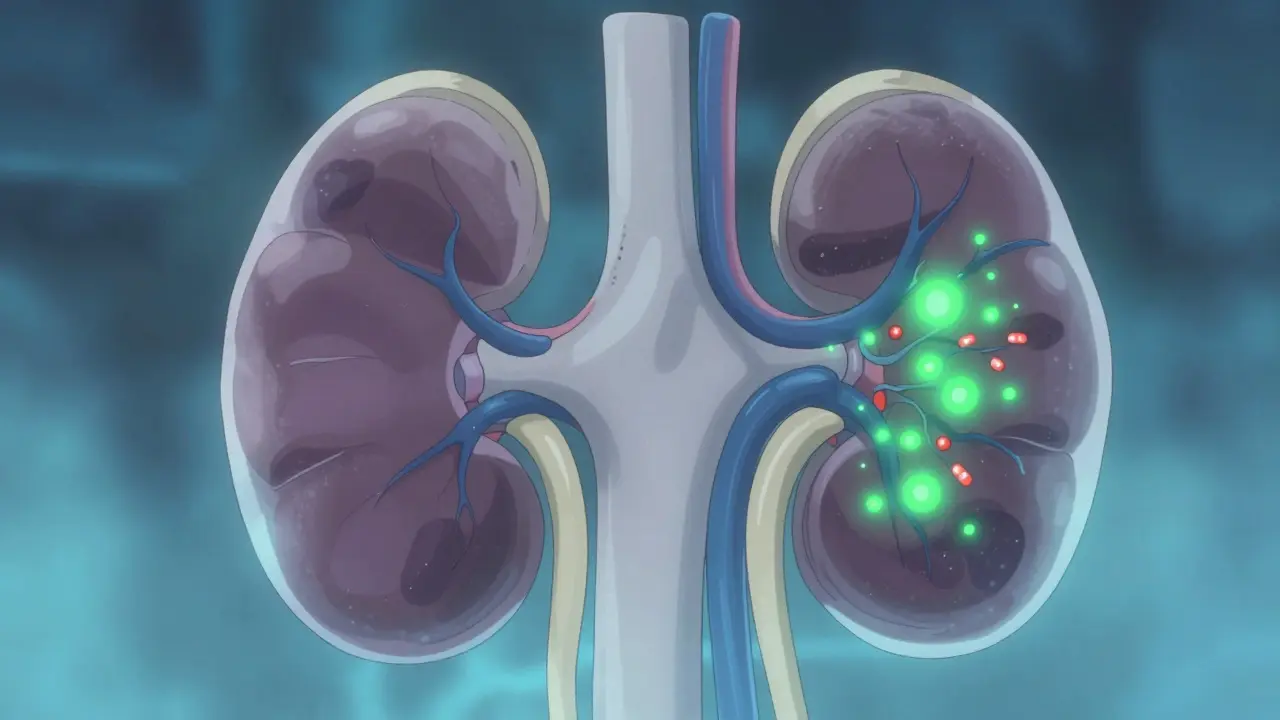
To understand the danger, we need to look at how your body handles these two drugs. Methotrexate is eliminated from your body primarily through your kidneys. Think of your kidneys as filtration plants that clean your blood. They rely on tiny blood vessels to function efficiently. These blood vessels are kept open by substances called prostaglandins.
When you take an NSAID, such as ibuprofen, naproxen, or diclofenac, these drugs block the production of prostaglandins. Without enough prostaglandins, the blood vessels in your kidneys constrict. Blood flow drops by approximately 15-20%. When blood flow slows down, your kidneys cannot filter out methotrexate as quickly as they should.
This creates a backlog. Instead of leaving your system, methotrexate stays in your bloodstream longer. Studies show that concurrent use of NSAIDs can decrease methotrexate clearance by 25-40%. In some cases, serum levels of the drug increase by up to 50%. This accumulation turns a therapeutic dose into a potentially toxic one.
Low-Dose vs. High-Dose: Not All Risks Are Equal
It is crucial to distinguish between how methotrexate is used. The risk profile changes dramatically depending on the dosage.
Low-Dose Therapy: Most patients with rheumatoid arthritis, psoriasis, or lupus take low doses, typically between 5 mg and 25 mg per week. For these patients with healthy kidneys (an estimated glomerular filtration rate, or eGFR, above 60 mL/min/1.73m²), the risk of serious harm from occasional NSAID use is lower. A 2021 systematic review in *Rheumatology* found no statistically significant increase in serious adverse events for this specific group. However, "lower risk" does not mean "no risk." Symptoms like fatigue, mouth ulcers, and mild liver enzyme elevation are still common complaints among patients who combine these drugs without monitoring.
High-Dose Therapy: Patients undergoing chemotherapy for cancer often receive high-dose methotrexate (typically ≥500 mg/m²). For these individuals, adding an NSAID is extremely dangerous. A 2022 meta-analysis showed that co-administration increases the risk of severe toxicity, including acute kidney injury and life-threatening myelosuppression (a drop in blood cell counts), by 4.7-fold. In oncology settings, NSAIDs are generally strictly avoided during high-dose methotrexate cycles unless absolutely necessary and under intense monitoring.
Not All NSAIDs Carry the Same Weight
If you must use pain relief alongside methotrexate, the type of NSAID matters significantly. Some drugs hit the kidneys harder than others.
| Drug Name | Risk Level | Estimated Increase in MTX Levels | Key Mechanism |
|---|---|---|---|
| Ketorolac | Highest | Up to 50% | Potent inhibition of renal prostaglandins |
| Ibuprofen / Naproxen | Intermediate | 25-35% | Non-selective COX inhibition |
| Celecoxib | Lowest | 10-15% | Selective COX-2 inhibition |
Ketorolac is considered the highest-risk NSAID due to its powerful effect on reducing renal blood flow. It is rarely recommended for long-term use anyway, but combining it with methotrexate is particularly hazardous. On the other end of the spectrum, Celecoxib, a selective COX-2 inhibitor, appears to have a lower interaction potential. While it is not risk-free, it may be a safer option for short-term pain management in carefully selected patients.
The Hidden Danger: Asymptomatic Kidney Stress
One of the most insidious aspects of this interaction is that it often feels like nothing until it is too late. A 2020 systematic review found that 63% of mild-to-moderate renal impairment cases associated with this drug combination were asymptomatic. You might not feel pain in your back or notice changes in your urine output immediately.
The warning signs are often subtle and easily dismissed as side effects of methotrexate itself or just "getting older." These include:
- Persistent fatigue that doesn't improve with rest
- Nausea or loss of appetite
- Mouth sores or ulcers appearing more frequently
- Unexplained bruising or bleeding (signs of low platelets)
- Fewer red blood cells leading to pallor or shortness of breath
Data from the FDA Adverse Event Reporting System shows that 78% of serious interaction cases involved patients who had not had their renal function tested within 30 days of starting the NSAID. Regular blood work is your only reliable early warning system.

How to Manage Pain Safely
Avoiding NSAIDs entirely isn't always practical for people with chronic inflammatory conditions. Here is how experts recommend managing the balance:
- Check Your Baseline: Know your eGFR. If it is below 60 mL/min/1.73m², avoid NSAIDs completely. If it is above 90, you have more flexibility, but caution is still required.
- Use the Lowest Dose: If you take ibuprofen, use the minimum effective dose for the shortest possible time. Do not take it daily if you can avoid it.
- Space Out Medications: Try to separate the timing of your methotrexate dose and your NSAID dose by at least 12 hours. This minimizes the peak concentration overlap in your system.
- Monitor Closely: Get a serum creatinine test and a complete blood count (CBC) 48-72 hours after starting any new NSAID therapy. If levels are stable, continue regular monitoring every 4-8 weeks.
- Consider Alternatives: Acetaminophen (paracetamol) up to 3 g/day does not affect kidney function in the same way and is generally safer for pain relief, though it does not reduce inflammation. For inflammatory pain, discuss adjusting your DMARD regimen with your rheumatologist rather than adding NSAIDs.
What Experts Say
Medical guidelines have evolved on this topic. Historically, doctors advised avoiding all NSAIDs with methotrexate. Today, the approach is more nuanced. Dr. Joan Kremer, a leading rheumatologist, notes that cautious use of short-acting NSAIDs is acceptable for patients with normal renal function, provided there is strict monitoring. Conversely, the European League Against Rheumatism (EULAR) recommends absolute avoidance for patients over 65 or those with any degree of renal impairment (eGFR <90 mL/min/1.73m²), citing a 2.8-fold increased mortality risk in these demographics.
The bottom line is that communication is key. Never assume your pharmacist or primary care provider knows you are on methotrexate if you are visiting them for a different issue. Always state clearly: "I am taking methotrexate weekly." This simple sentence can prevent a prescription for a drug that could harm your kidneys.
Can I take Tylenol (acetaminophen) with methotrexate?
Yes, acetaminophen is generally considered safe to take with methotrexate. Unlike NSAIDs, it does not inhibit prostaglandin synthesis in the kidneys, so it does not reduce methotrexate clearance. However, stick to the recommended dose (usually no more than 3 grams per day) to protect your liver, as methotrexate can also cause liver stress.
How soon after starting an NSAID should I get my blood tested?
You should request a serum creatinine test and a complete blood count (CBC) 48 to 72 hours after initiating NSAID therapy. This window allows enough time for drug levels to accumulate and for any initial impact on kidney function or blood cells to become visible in lab results.
Is topical diclofenac gel safe with methotrexate?
Topical NSAIDs like diclofenac gel absorb into the bloodstream much less than oral pills, resulting in lower systemic exposure. Therefore, the risk of renal toxicity is significantly reduced. However, if you have large areas of skin covered or compromised skin barrier, absorption can increase. Consult your doctor, but topical options are often a preferred alternative to oral NSAIDs for localized pain.
What are the symptoms of methotrexate toxicity?
Symptoms can include severe fatigue, nausea, vomiting, diarrhea, mouth sores, hair loss, fever, and unusual bruising or bleeding. In severe cases, it can lead to acute kidney failure or bone marrow suppression, which reduces your ability to fight infection and stop bleeding. If you experience these symptoms after taking an NSAID, seek medical attention immediately.
Does drinking water help prevent this interaction?
Staying well-hydrated supports overall kidney function and helps flush toxins from your body. While hydration alone will not negate the pharmacokinetic interaction between NSAIDs and methotrexate, being dehydrated makes your kidneys more vulnerable to the reduced blood flow caused by NSAIDs. Drink plenty of water, especially on days you take methotrexate.