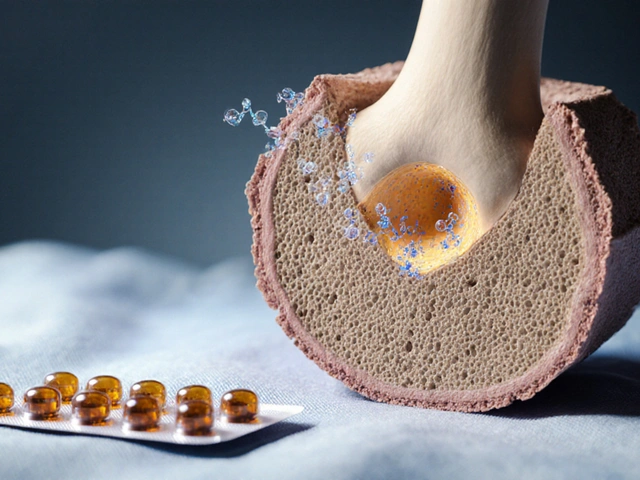
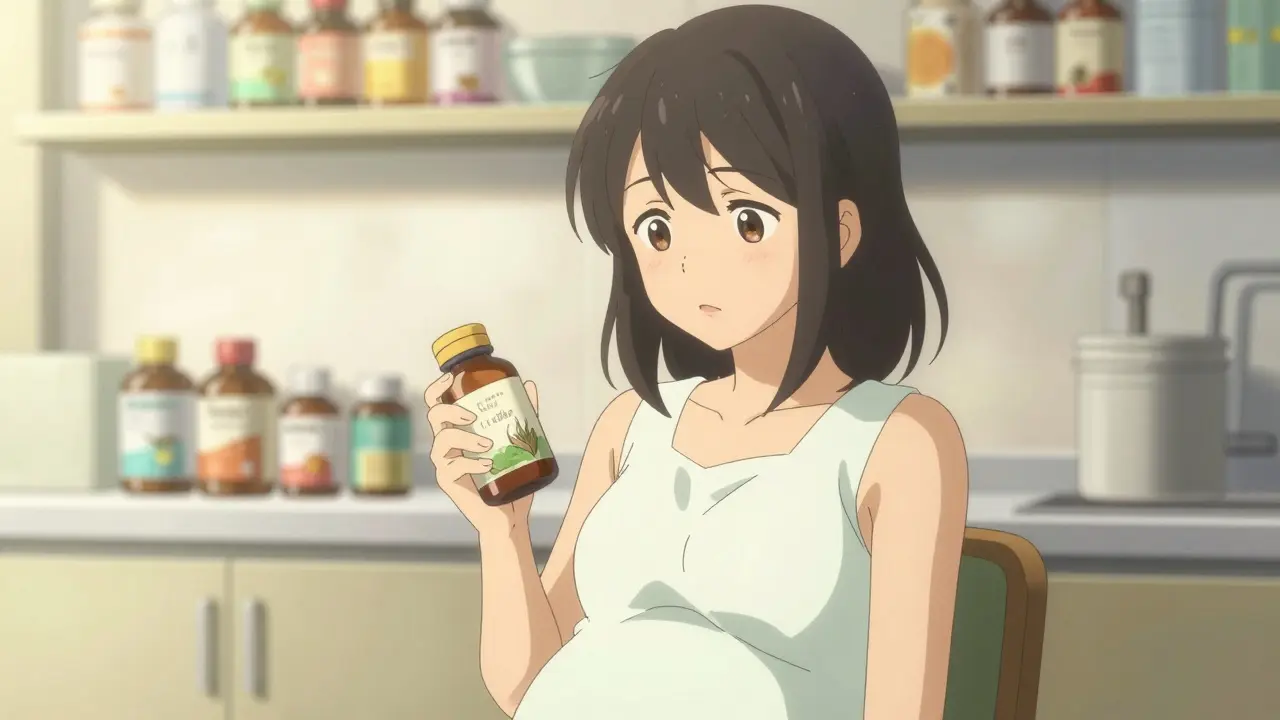
You might think that because a supplement comes from a plant, it must be safe. After all, nature made it. But when you are pregnant, "natural" does not automatically mean harmless. In fact, about 29% of pregnant women worldwide use herbal supplements during their pregnancy. That is nearly one in three. Yet, fewer than 10% of medicines approved since 1980 have enough data to prove they are safe for unborn babies. This creates a dangerous gap between what you want to do-avoid synthetic drugs-and what is actually proven to keep your baby healthy.
The U.S. Food and Drug Administration (FDA) does not test herbal supplements with the same rigor as prescription medications. Pregnant women are systematically excluded from clinical trials for new treatments. This means that while you might see a bottle labeled "safe for pregnancy" on a shelf, that claim often lacks scientific backing. Understanding which herbs have real evidence behind them and which ones carry hidden risks is crucial for your health and your baby’s development.
The Regulatory Gap: Why "Natural" Isn't Always Safe
When you buy a vitamin or an herbal remedy, you expect it to be pure and effective. However, the regulatory landscape for these products is loose. The FDA treats most herbal supplements as food, not as drugs. This distinction matters significantly. Prescription drugs undergo years of testing to ensure they do not cause birth defects or other complications. Herbal supplements skip this step entirely.
This lack of oversight leads to serious quality control issues. Inspections have revealed that between 20% and 60% of herbal supplements contain unlisted ingredients or incorrect dosages. One batch of a product might be mild, while the next could be potent enough to trigger contractions. You cannot rely on the label alone. The variability in strength and purity makes it impossible to guarantee safety without rigorous independent testing, which simply does not exist for most of these products.
In Europe, the European Medicines Agency maintains stricter oversight through the Traditional Herbal Medicinal Products Directive. This requires registration and safety documentation for herbal products. However, enforcement varies by member state, and even here, the evidence base for many traditional remedies remains thin. If you live in the UK or elsewhere in the EU, you might feel more secure, but the fundamental problem remains: we simply do not have enough large-scale studies on how these plants affect fetal development.
Ginger: The Exception That Proves the Rule
If there is one herb that stands out in the research, it is Ginger (Zingiber officinale). Ginger has been studied extensively for its ability to manage nausea and vomiting during pregnancy. Up to 80% of pregnant women experience morning sickness, making relief a high priority.
Clinical evidence supports ginger as a first-line treatment. Studies show it can be as effective as conventional anti-nausea medications but with fewer side effects. The key is dosage. Research indicates that doses below 1,000 mg per day are generally safe and effective. Many women find relief with just 250 mg taken four times a day. It is important to note that ginger can interact with blood thinners, so if you are taking medication for clotting disorders, you need to talk to your doctor before adding it to your routine.
Ginger use peaks during the first trimester, aligning with the peak of nausea symptoms. Its safety profile is robust compared to other herbs, largely because it has been used traditionally for centuries and modern science has caught up to validate its benefits. It is one of the few herbal interventions where the evidence outweighs the theoretical risks.
Raspberry Leaf: Tradition vs. Medical Evidence
Red Raspberry Leaf (Rubus idaeus) is another popular choice, particularly in the third trimester. Many midwives and traditional birth practitioners recommend it to "tone the uterus" and potentially shorten labor. About 78% of women who use raspberry leaf start doing so in their final weeks of pregnancy.
However, the medical community views this herb with caution. The American Academy of Family Physicians (AAFP) warns that using raspberry leaf to induce labor may increase the rate of cesarean deliveries. They classify it as "likely unsafe" for labor induction. While drinking a cup of raspberry leaf tea occasionally is unlikely to cause harm, consuming concentrated extracts or large amounts regularly could stimulate premature contractions. There is no standardized dosing protocol, which adds to the risk. Unlike ginger, where we know the effective dose, raspberry leaf’s impact varies wildly depending on the preparation.
If you are considering raspberry leaf, discuss it with your healthcare provider. Do not self-prescribe it to speed up labor. The potential benefit of a smoother delivery does not outweigh the risk of unnecessary intervention or early onset of labor.

Chamomile and Cranberry: Hidden Risks in Common Teas
Chamomile (Matricaria recutita) is a staple in many households for sleep and anxiety. It seems gentle enough, right? The evidence suggests otherwise. Some studies link chamomile use to concerns about ductus arteriosus closure, increased preterm birth, and low birth weight. While occasional sips of weak tea are probably fine, heavy consumption should be avoided. The AAFP cites these specific risks, urging caution despite its popularity.
Cranberry supplements are often marketed for preventing urinary tract infections (UTIs). UTIs are common in pregnancy and can lead to serious kidney infections if untreated. Cranberry might offer some prevention, but it is not as reliable as antibiotics like nitrofurantoin. More importantly, cranberry supplements have been associated with spotting in the second and third trimesters. If you notice any bleeding after starting cranberry, stop immediately and contact your doctor. The risk of masking a serious issue or causing irritation is not worth the marginal benefit over standard medical care.
Herbs to Avoid Completely
Some herbs are not just risky; they are dangerous. You should avoid these entirely during pregnancy:
- Pennyroyal: Known to cause seizures and liver damage. It is highly toxic and can induce miscarriage.
- Blue Cohosh: Often used to induce labor, but it can cause severe fetal distress and rapid heart rate changes. It is unpredictable and unsafe.
- Rosemary (in medicinal amounts): While rosemary flavoring in food is safe, consuming rosemary oil or large quantities of the herb orally can stimulate the uterus. Topical use is also considered insufficiently studied for safety.
- Sage: Can act as an emmenagogue, meaning it stimulates blood flow in the pelvic area and uterus, potentially leading to contractions.
These substances have uterine-stimulating properties that can trigger premature labor or miscarriage. Do not experiment with them. If you see them listed in a blend, put the product back on the shelf.

Why Women Use Herbs Despite the Risks
It is easy to judge women for using unproven remedies, but the reasons are complex. A study in Catalonia found that 48% of pregnant women consumed herbal products. Nearly half of them started without consulting a healthcare provider. Why? Because they trust family members, social media influencers, or internet searches more than medical advice.
There is a strong cultural belief that "natural" is better than "synthetic." Many women fear the side effects of prescription drugs and believe herbs are gentler. This perception persists even though herbs are chemicals too-just derived from plants instead of labs. The lack of clear communication from doctors exacerbates this. Only a small percentage of providers routinely ask about herbal use, leaving women to navigate this minefield alone.
Social media plays a huge role. On platforms like Reddit, thousands of pregnant women share experiences, but misinformation spreads quickly. A personal anecdote is not scientific evidence. Just because one woman took blue cohosh and had a quick labor does not mean it was safe for her baby. These online communities often reinforce risky behaviors rather than providing accurate guidance.
How to Talk to Your Doctor About Herbs
Transparency is your best protection. When you visit your obstetrician or midwife, bring every supplement you take, including vitamins, teas, and essential oils. Ask specifically: "Is this safe for my pregnancy stage?" and "Are there any interactions with my prenatal vitamin?"
Do not assume your doctor knows everything about herbal medicine. Many physicians receive limited training in this area. The American Board of Family Medicine recommends 15-20 hours of continuing education for prenatal care providers to adequately understand herbal risks. If your doctor dismisses your questions, seek a second opinion from a provider knowledgeable in integrative medicine or consult resources like MotherToBaby, which offers evidence-based fact sheets updated quarterly.
Keep a log of what you take and when. Note any symptoms, such as spotting, cramping, or changes in fetal movement. This information helps your provider assess whether a supplement might be causing issues. Remember, you are not asking for permission to be unhealthy; you are seeking partnership in ensuring the safest possible outcome for you and your baby.
| Herb | Common Use | Safety Status | Key Risks |
|---|---|---|---|
| Ginger | Nausea/Vomiting | Generally Safe (<1g/day) | Blood thinner interaction |
| Red Raspberry Leaf | Uterine Toning/Labor Prep | Use Caution | Premature contractions, C-section risk |
| Chamomile | Sleep/Anxiety | Limited Safety Data | Preterm birth concerns, low birth weight |
| Cranberry | UTI Prevention | Possibly Effective | Spotting in 2nd/3rd trimester |
| Blue Cohosh | Labor Induction | Unsafe | Fetal distress, toxicity |
| Pennyroyal | Digestive Issues | Unsafe | Seizures, liver damage, miscarriage |
The Future of Herbal Safety Research
The field is slowly improving. The National Institutes of Health launched the $12.7 million Pregnancy Herb Safety Initiative in September 2023 to address these evidence gaps through prospective cohort studies. We can expect a significant increase in research over the next five years. However, conducting ethical clinical trials with pregnant women remains challenging. Researchers cannot knowingly expose fetuses to potential harms.
Until then, the burden of proof lies with the consumer. Assume that if it is not explicitly approved by your healthcare provider, it is not safe. The market will continue to sell these products, and cultural traditions will persist, but your child’s health depends on informed choices. Stay skeptical of marketing claims, rely on peer-reviewed evidence, and prioritize open communication with your medical team.
Is it safe to drink herbal tea during pregnancy?
Not all herbal teas are safe. Ginger tea is generally considered safe for nausea in moderation. However, teas containing chamomile, raspberry leaf, or sage should be used with caution or avoided due to potential risks like preterm birth or uterine stimulation. Always check the ingredients list and consult your doctor before drinking any herbal tea regularly.
Can I take vitamins and herbal supplements together?
You should always inform your healthcare provider about all supplements you take, including vitamins and herbs. Some herbs can interfere with the absorption of nutrients or interact with medications. For example, high doses of certain herbs might reduce the effectiveness of prenatal vitamins. Never combine them without professional guidance.
Why are herbal supplements not regulated like drugs?
In the US, the FDA classifies most herbal supplements as dietary supplements, not drugs. This means they do not require pre-market approval for safety or efficacy. Manufacturers are responsible for ensuring their products are safe, but the FDA only takes action if a product is found to be harmful after it reaches consumers. This creates significant safety gaps.
What are the signs that an herbal supplement is harming my pregnancy?
Watch for unusual symptoms such as vaginal spotting or bleeding, abdominal cramping, changes in fetal movement, dizziness, or nausea that worsens after taking the supplement. If you experience any of these, stop taking the supplement immediately and contact your healthcare provider.
Is red raspberry leaf tea safe in the first trimester?
Most experts recommend avoiding red raspberry leaf tea in the first trimester due to its potential to stimulate the uterus. It is typically suggested only in the third trimester, and even then, under the guidance of a healthcare provider. The risk of triggering premature contractions outweighs the unproven benefits earlier in pregnancy.