
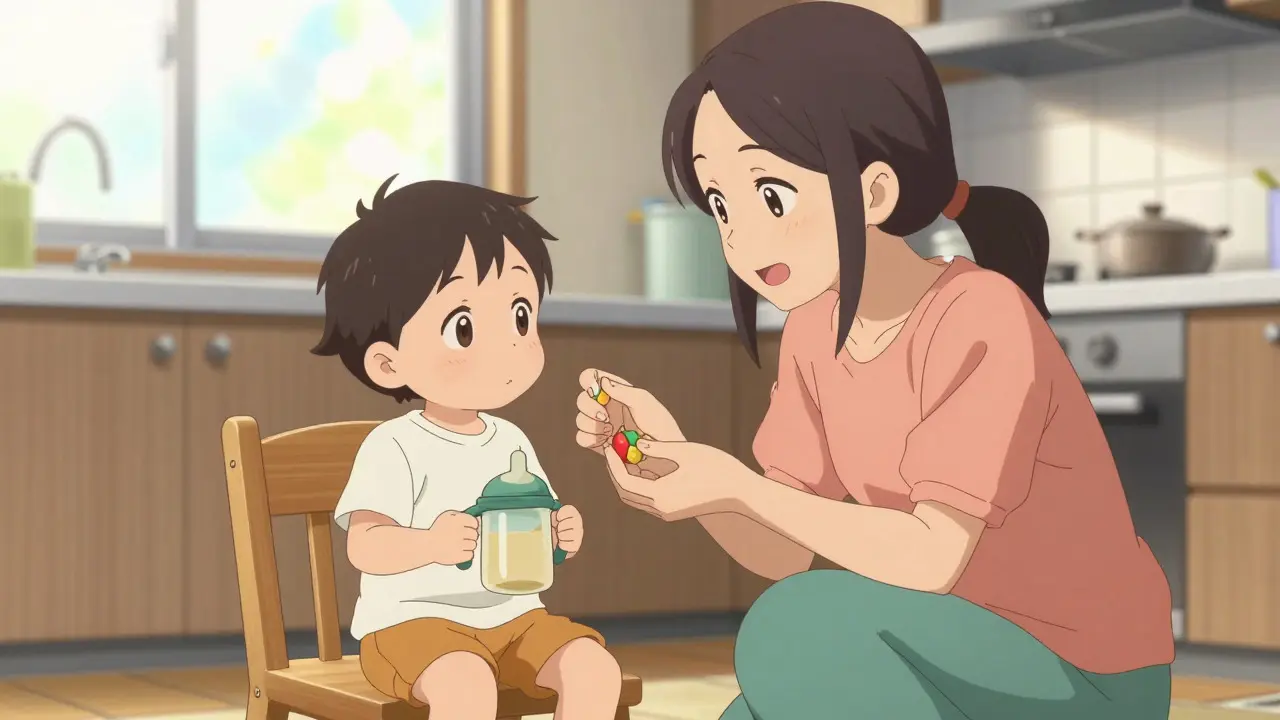
There is a specific kind of panic that comes with trying to give medicine to a child who has decided the bottle is an enemy. You pour the syrup, they spit it out, you try again, and suddenly half the dose is on the floor and the other half is in their hair. If you are dealing with this daily, you are not alone. Many parents and caregivers eventually look for a way out of the liquid struggle. The solution often lies in switching to chewable tablets or solid pills. But here is the catch: you cannot just swap one for the other without understanding the mechanics. Doing it wrong can lead to wasted money, ineffective treatment, or even choking hazards.
This guide breaks down exactly how to make that transition safely. We will look at why solids are often better than liquids, how to calculate the correct dose so you don’t under-medicate, and the critical steps to ensure your patient actually chews the pill instead of swallowing it whole. Whether you are managing a toddler’s fever or helping an elderly parent with swallowing difficulties (dysphagia), these insights will help you navigate the change with confidence.
Why Switch from Liquid to Solid Forms?
Liquid medications have been the standard for pediatrics and geriatric care for decades. They seem easier because they require no chewing. However, recent data suggests that liquids are actually a major source of error. According to studies by the American Association of Pharmaceutical Scientists, measuring liquid doses can result in a 15-20% variance due to user error. Did you use the right cup? Was it level? Did some stick to the sides? These small mistakes add up.
In contrast, chewable tablets offer much higher precision. When you hand someone a single tablet, the dose is exact. There is no guessing. Beyond accuracy, there are practical benefits that make life easier:
- Portability: Liquids are bulky and heavy. Many pediatric liquids also require refrigeration (about 68% of them). Chewables fit in a pocket or a small bag and do not need cold storage.
- Shelf Life: Liquid medicines often expire within 12 to 18 months. Solid formulations like chewables typically last 24 to 36 months, meaning less waste if the bottle isn’t used quickly.
- Taste Masking: While liquids taste sweet, they can leave a lingering aftertaste. Modern chewables use advanced excipients to mask bitter drug flavors effectively, reducing the gag reflex.
The global market for chewable pharmaceuticals grew to $18.7 billion in 2022, driven largely by these advantages. For families tired of spills and inaccurate doses, the switch is often a relief.
Understanding Bioequivalence: Is It Safe to Switch?
Before making any change, you must confirm that the chewable version delivers the same amount of active ingredient into the bloodstream as the liquid. This concept is called bioequivalence. Just because both forms contain "500mg of Ibuprofen" does not mean they work identically in the body.
The FDA requires that generic or alternative forms demonstrate an Area Under the Curve (AUC) and peak concentration (Cmax) within 80-125% of the reference product. In plain English, this means the chewable must release the drug at a similar rate and total amount as the liquid. Most major brands, such as Pfizer’s Advil Children’s Chewables or McNeil’s Tylenol Chewables, meet these strict standards.
However, absorption speed differs. Liquids are already dissolved, so they hit the system faster (peak effect in 15-30 minutes). Chewables take longer to break down in the stomach, leading to a peak effect in 30-60 minutes. If you are treating a sudden high fever, keep this delay in mind. For chronic conditions or maintenance dosing, this difference is negligible.
Calculating the Correct Dose
This is the most dangerous part of the transition. You cannot simply eyeball it. You must convert volume (milliliters) to mass (milligrams) accurately.
Let’s look at a common example: Acetaminophen (Tylenol).
| Formulation | Concentration | Target Dose (e.g., for 12-17 lbs) | Measurement Required |
|---|---|---|---|
| Liquid Suspension | 160mg per 5mL | 80mg | 2.5 mL (½ teaspoon) |
| Chewable Tablet | 80mg per tablet | 80mg | 1 full tablet |
In this scenario, the math is clean. But what if the tablet strength doesn’t match the liquid dose perfectly? Always check the label. If your child needs 100mg and the chewables come in 80mg or 160mg, you have a problem. Do not split chewable tablets unless the manufacturer explicitly states they are scored for splitting. Splitting a non-scored chewable can crush the internal structure, altering how it dissolves and potentially causing a dose dump.
If the doses do not align, consult your pharmacist. They may recommend a different brand or sticking with the liquid. Never guess.
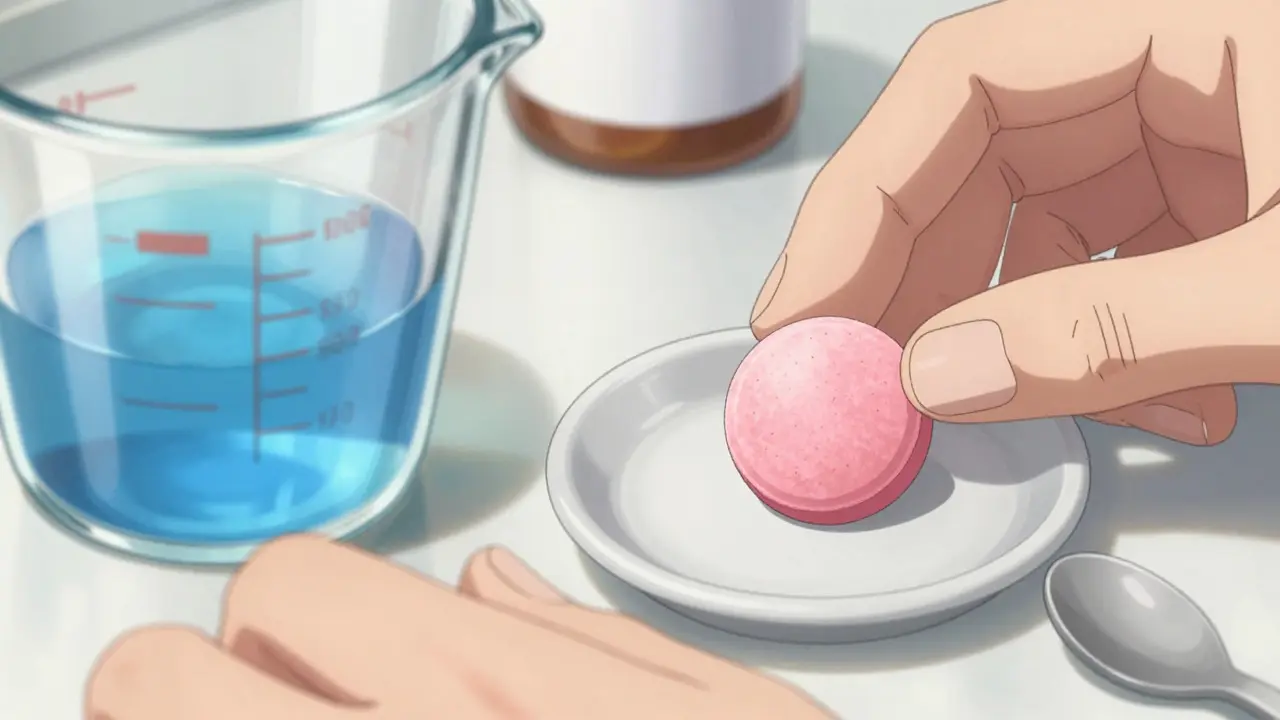
The Critical Step: Chewing Technique
You might think "chewable" is self-explanatory, but research shows otherwise. A study from the University College London found that 23% of transition failures happened because patients swallowed the tablet whole. Why does this matter?
Chewable tablets are engineered to be broken down by teeth. They often lack the strong disintegrants found in regular swallowable pills. If swallowed whole, a chewable tablet can sit in the stomach for over two hours before dissolving, compared to 30 minutes when chewed. This delays relief and can cause nausea.
Here is how to teach proper technique:
- Place on the tongue: Put the tablet on the front or side of the tongue, not the back, to avoid triggering the gag reflex.
- Chew thoroughly: Aim for 15-20 seconds of chewing. The goal is to turn the tablet into a paste or small crumbs.
- Swallow with water: Even though it’s chewed, follow it with a sip of water to wash the residue down and prevent tooth staining or irritation.
For children, make it a game. "Crunch like a dinosaur." For elderly patients with dementia, demonstration is key. Show them, then watch them.
Who Should Avoid Chewables?
While chewables are great for many, they are not universal. Here are groups who need caution:
- Severe Dysphagia: If a patient has significant difficulty swallowing even soft foods, a chewable tablet might pose a choking risk. In these cases, ask a doctor about Orally Disintegrating Tablets (ODTs) which melt on the tongue without water.
- Dental Issues: Patients with weak teeth, braces, or dental pain may find chewing painful. Check for crushed edges on the tablet after administration to ensure it was fully masticated.
- Allergies to Excipients: Chewables often contain more sugar, artificial colors, or binders like hydroxypropyl methylcellulose (HPMC) than liquids. Check the inactive ingredients list, especially for diabetics or those with corn/sugar allergies.

Troubleshooting Common Problems
Even with the best preparation, hiccups happen. Here is how to handle them.
"The taste is bad." Unlike liquids, you can’t dilute a chewable. If the taste is rejected, try giving it immediately after a meal or with a small spoonful of applesauce (if the drug label allows food interaction). Some brands offer fruitier flavors; ask your pharmacist for alternatives.
"They are spitting it out." This is common in toddlers. Try crushing the chewable tablet into a fine powder and mixing it with a very small amount of thick food like yogurt or pudding. Note: Only do this if the package says it can be crushed. If it says "Must be chewed," crushing might alter the drug release. When in doubt, call the pharmacy.
"It’s too big to swallow." High-dose chewables (like 500mg ibuprofen) can be large. Ensure the patient is sitting upright. If size is a persistent issue, look for lower-strength tablets and increase the number of tablets rather than using one giant pill.
When to Call the Doctor
Monitor closely during the first week of transition. Watch for signs that the medication isn’t working-such as a fever returning quickly or pain persisting. This could indicate the patient is swallowing the tablet whole, delaying absorption. Also, watch for new side effects like stomach upset, which can occur if the tablet dissolves too slowly or irritates the esophagus.
Making the switch from liquid to chewable medication is a powerful tool for improving compliance and accuracy. By verifying bioequivalence, calculating doses precisely, and teaching proper chewing habits, you can eliminate the stress of spills and measurement errors. It takes a little extra effort upfront, but the long-term benefits for health and peace of mind are worth it.
Can I crush a chewable tablet if my child won't chew it?
Only if the packaging explicitly states it can be crushed. Many chewable tablets are designed to be broken down by teeth, not mechanical crushing. Crushing can damage the coating or binder, changing how the drug releases. If allowed, mix the powder with a small amount of soft food like applesauce or yogurt, but ensure the entire mixture is consumed.
Is a chewable tablet stronger than the liquid version?
Not necessarily. Strength depends on the milligram (mg) content, not the form. However, chewables often provide more accurate dosing because you avoid measurement errors associated with liquid cups. Always compare the mg per dose on both labels to ensure equivalence.
Do chewable tablets expire faster than liquids?
No, they usually last longer. Liquid medications often have a shelf life of 12-18 months and may require refrigeration. Chewable tablets are more stable, typically lasting 24-36 months at room temperature, making them better for travel and storage.
What if my patient swallows the chewable tablet whole?
If swallowed whole, the tablet may take much longer to dissolve (over 2 hours vs. 30 minutes), delaying the medication's effect. It might also cause nausea. Monitor for effectiveness. If this happens frequently, consider switching to an Orally Disintegrating Tablet (ODT) or returning to liquid form.
Are there sugar-free chewable options for diabetics?
Yes, many manufacturers offer sugar-free versions sweetened with sorbitol or mannitol. Always check the "Inactive Ingredients" list on the box. Look for terms like "Sugar-Free" or avoid sucrose/glucose. Inform your pharmacist about diabetes so they can recommend appropriate brands.